Jean Lafitte National Historical Park and Preserve spans six distinct sites across south Louisiana, linking wetlands, battlefields, cultural centers, and historic neighborhoods into one broad interpretation of the lower Mississippi River Delta. Its landscape ranges from the swamps and marshes of Barataria Preserve to the urban setting of the French Quarter Visitor Center in New Orleans. The park protects both natural and cultural resources, showing how waterways, wildlife, settlement, and migration have shaped southern Louisiana. Its unusual structure allows visitors to explore several different environments while following connected stories about the people and traditions of the region.
The park presents the layered identities of south Louisiana, including Indigenous, Acadian, Cajun, Creole, African, Spanish, and other cultural influences. The three Acadian cultural centers in Lafayette, Eunice, and Thibodaux explore Cajun language, music, crafts, cooking, dancing, and rural traditions. Chalmette Battlefield and National Cemetery interpret the Battle of New Orleans and the many people connected with the conflict and its aftermath. The French Quarter Visitor Center examines the cultural exchange that shaped New Orleans. The park also acknowledges the difficult history of enslavement, displacement, migration, and changing relationships among the region’s communities.
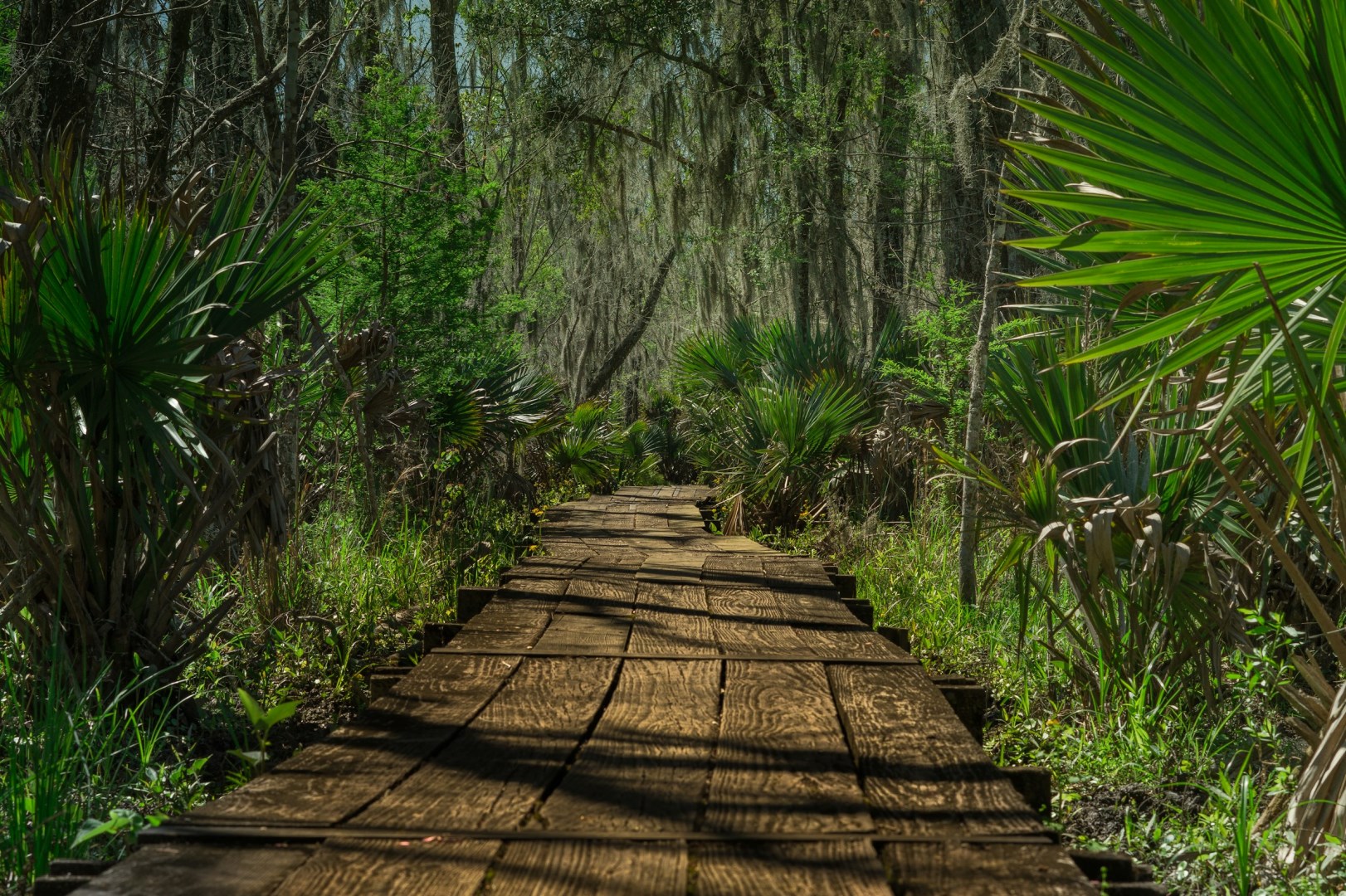
Barataria Preserve is the park’s primary wetland landscape, protecting extensive hardwood forest, swamp, marsh, bayous, and waterways southwest of New Orleans. Trails provide opportunities to see alligators, armadillos, otters, Spanish moss, live oaks, and hundreds of bird species. The Bayou Coquille Trail passes through an area containing archaeological evidence of Indigenous habitation. At Chalmette, visitors can walk across the battlefield and see the Chalmette Monument and National Cemetery beside the Mississippi River. The park’s six locations together demonstrate how dramatically the region’s natural and built environments can differ within a relatively small area.
Food is an important part of the park’s interpretation of southern Louisiana, with Cajun and Creole traditions reflecting ingredients, techniques, and customs shaped by many communities. Crawfish, including crawfish étouffée, is highlighted by the National Park Service as a major part of regional foodways, while boudin represents another traditional Louisiana specialty. Music is equally significant, particularly Cajun music presented through the cultural centers. Jean Lafitte’s name adds another distinctive layer: the Barataria wetlands were associated with his smuggling operations, and the park uses that history to explain the waterways and communities that made the delta difficult for outsiders to navigate.
Other Popular Destinations in Louisiana